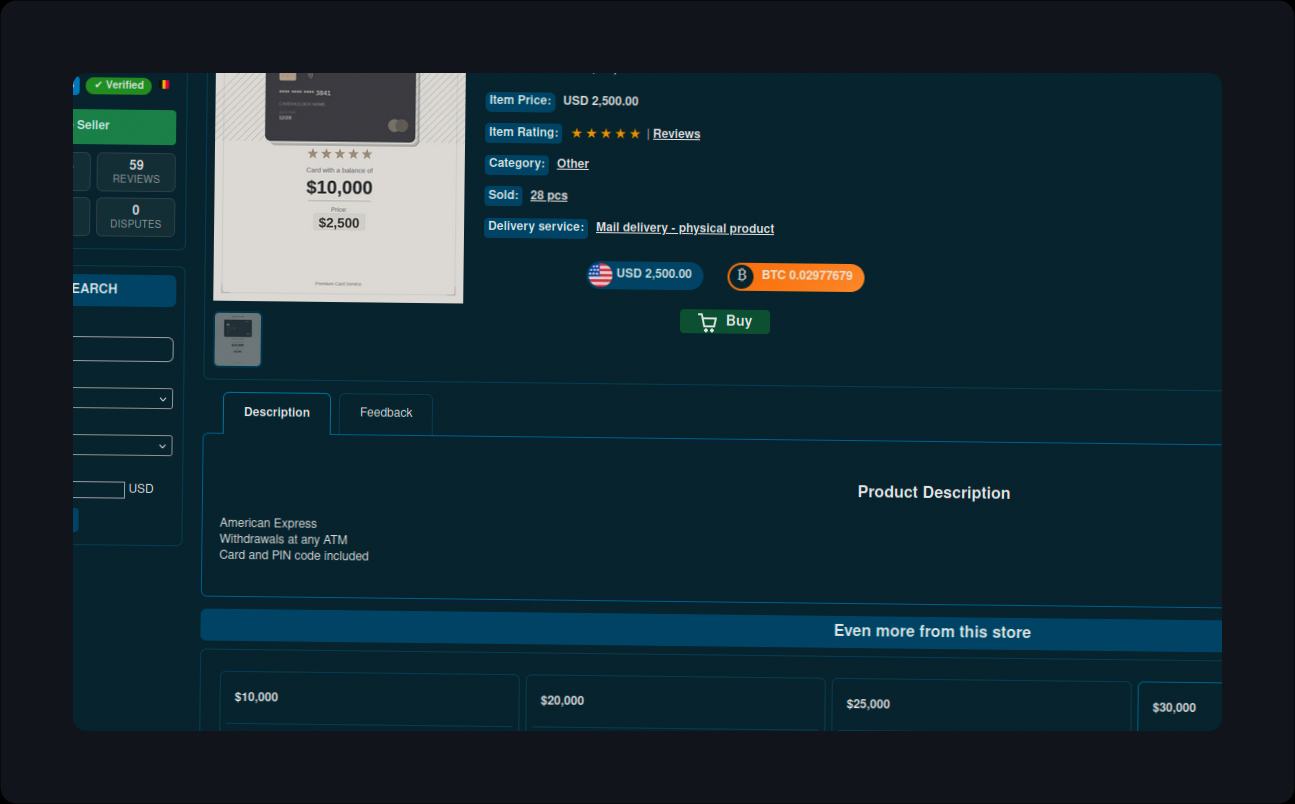
In 2024, in the month of November, a man aged 34 from Tampa Bay, Florida, discovered what he thought would be a simple method to earn money. He invested $480 into cryptocurrency and received six fake debit cards, which had stolen PIN codes sourced from a darknet website. These cards held illegal magnetic stripe information extracted from genuine bank accounts, a common practice in the carding industry.
At first, his venture seemed successful, as he managed to withdraw $4,200 from the initial three ATMs he accessed. However, his streak of good fortune came to a halt at the fourth machine, marking the end of his operation. This story is not just about acquiring such cards; it serves as a stark reminder of how swiftly a meticulous criminal can be apprehended within 72 hours. It underscores the effectiveness of ATM surveillance over conventional law enforcement methods and demonstrates how a digital trace can lead authorities straight to an individual, culminating in a 5-year federal prison sentence.
We explore the trail of evidence, the mistakes encountered, the financial fallout, and the insights security teams can gain from this incident.
What matters
ATM cameras and transaction logs turn digital carding into physical evidence.
Monero does not protect you if you buy it through a KYC exchange.
Anti-fraud systems flag tight geographic and time patterns automatically.
Storing cards, MSR devices, and cash at home creates direct physical proof.
The final buyer in a carding chain faces the highest physical risk and punishment.
- Break down the carding chain
Carding continues to be a significant method in the realm of cybercrime, centered on the illegal trade of stolen banking details. Mark's strategy was methodical:
Data Gathering — Criminals collect magnetic track information using various methods, including ATM skimmers, phishing scams, or obtaining data from dark web sites.
We transfer the stolen information onto blank plastic cards, which display forged cardholder names, numbers, and expiration dates.
Accessing PINs — If the PIN has been captured through a compromised device, the buyer can withdraw money.
Withdrawal of Cash — Funds are quickly withdrawn from ATMs, often before the victim realizes the fraud and can take steps to secure their accounts.
Laundering Money — Through Bitcoin ATMs or other exchanges, criminals convert cash into cryptocurrency, making tracking efforts more complex.
Mark acquired these cards from a marketplace whose name we prefer to keep private. He opted for Monero for payment due to its enhanced anonymity features. The delivery was carefully packaged to prevent any suspicion. While this transaction seemed smooth, we must not forget that ATMs are intricate surveillance systems, equipped with various security measures designed to deter or capture criminal actions.
- Check the camera risk you cannot remove
A modern ATM functions as a surveillance hub in addition to its cash-dispensing role. Generally, these devices come equipped with a camera capable of capturing user images at 1080p resolution, with many models also featuring infrared technology for improved performance in low-light settings. Some units may even have a hidden secondary camera angled differently to enhance monitoring.
Every transaction is recorded with meticulous precision, noting the exact time, amount withdrawn, card ID, ATM ID, and transaction status. The machine also logs its physical location and communicates this data back to the banking system. Each request directed to the processing center is stored along with pertinent connection information.
When Mark visited an ATM in a Tampa Bay suburb, the installed camera recorded his clear image—no disguise in sight. After withdrawing $700, he left, resulting in a video that lasted twenty-three seconds, more than adequate for any investigation.
Many criminals mistakenly assume their online anonymity extends to the physical world. Yet, an ATM clearly demonstrates how digital crimes can manifest in reality, signaling the conclusion of any such anonymity.
- Track the 15-day investigation timeline
Reports emerged on November 1, 2024, from victims in Florida, Georgia, and North Carolina who experienced unauthorized withdrawals from their accounts. In response, banks swiftly froze the compromised cards and implemented necessary actions within their fraud detection systems.
By Day 3, the fraud detection algorithms of the banks revealed an alarming trend of swift withdrawals involving cloned cards across various states. This finding raised an internal alert, directing attention to the bank's fraud investigation unit.
By Day 5, the escalation of the situation led to the U.S. Secret Service getting involved, an agency tasked with tackling financial crimes. Investigators began gathering transaction records and visual evidence from all ATMs associated with the suspicious activities.
By Day 8, one ATM's surveillance footage provided a distinct image of a suspect. By identifying him as Mark T. through a cross-reference with the Florida Department of Public Safety records, we established that he had no prior convictions. We discovered that all of his cash withdrawals occurred at locations no farther than 40 miles from his home.
On Day 12, investigators secured a warrant allowing them to examine digital traces, including browsing history, ISP records, and transactions from cryptocurrency wallets. The logs indicated Mark's access to Tor exit nodes during the suspicious transaction periods. A court order connected his Monero wallet to a marketplace account, revealing his payment methods.
A search warrant executed on Day 14 led to the recovery of six blank plastic cards, a magnetic stripe writing device, a laptop showing evidence of darknet activities, and $3,200 in cash, alongside packaging materials.
Custody of Mark was assumed on Day 15. During the interrogation, it was admitted by him that he had obtained the cloned cards and that four of them had been successfully cashed out, while he noted that the bank had already deactivated the other two before he could use them.
- Read the numbers that sealed the case
The financial aftermath of this incident shows how rapidly a small-scale operation can fall apart.
Document type Particulars Cash withdrawals 4 The total amount withdrawn reached $4,900. The amount paid for cards reached $480. It took 15 days from the time of withdrawal until the arrest. Mark received a sentence of 5 years in federal prison, equating to 60 months. A fine and restitution of $22,000 were imposed on Mark T. Supervised release will last for a period of 3 years. Crucial in tracking the digital footprint was the method used for these transactions, as authorities linked the marketplace account to the Monero wallet through the exchange. This incident underscores the importance of exercising vigilance in online financial activities.
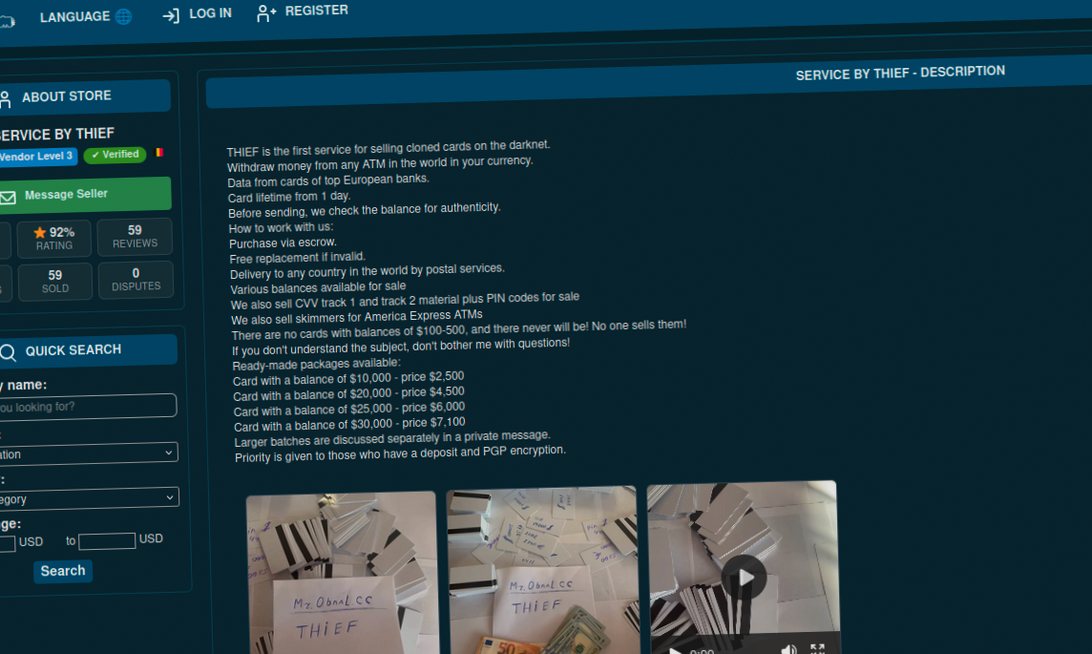
A cloned card service interface like the one Mark used.
- See why Monero did not save him
Mark opted for Monero due to its design for privacy. However, certain factors ultimately led investigators to him.
Firstly, the method of acquiring Monero was a key issue. He utilized a centralized exchange that required know-your-customer (KYC) compliance, which involved submitting a passport and a selfie. Following a court directive, the exchange revealed his identity along with his transaction details. While tracking Monero after the initial purchase can be complex, the specific timing and amount of his acquisition served as solid evidence against him.
Secondly, the timeline was crucial. The sequence of acquiring Monero, purchasing cards from an online marketplace, receiving those items, and using ATMs unfolded within a tight two-week period. This overlap provided circumstantial yet compelling proof connecting him to illicit activities.
Lastly, the physical evidence collected at his residence was damning. The cards confiscated matched magnetic tracks linked to actual victims, leaving no room for denial.
In addition, video recordings captured his likeness, which cannot be erased or altered. Even with meticulous planning, the captured footage firmly placed Mark at the scene of the crime.
The website where the purchase was made became a key part of the digital trail once investigators linked the Monero wallet to the marketplace account through the exchange.
- List the six mistakes that ended the run
Mark's mistakes were straightforward and stemmed from basic operational security oversights that fraud detection systems and investigators utilize daily.
All ATM transactions were conducted within a single geographic area — the four machines were located within 40 miles of his residence, raising immediate concerns for any pattern analysis.
Lack of disguise — he didn’t wear a mask, glasses, or hat, leaving his face easily identifiable via the DPS database.
He purchased Monero through a centralized exchange — the KYC process linked his identity to the cryptocurrency, which he subsequently used on the marketplace.
Evidence was kept at home — items such as cards, an MSR device, and laptop history were discovered during the search. Digital footprints can persist even after deletion due to remnants left by the Tor Browser and operating system updates.
Cash stored at home — $3,200 was confiscated during the search, and the denominations matched those dispensed by the ATM.
Quick succession of withdrawals — all transactions occurred within a two-week period. Distributing them over several months could have delayed the fraud detection response, though camera footage would still have identified him.
- Apply the lessons for security professionals
Mark's experience illustrates how our protective strategies frequently exceed the assumptions made by those trying to engage in fraudulent activities.
The anti-fraud mechanisms utilized by financial institutions act as the frontline defense against deceitful actions. These advanced systems apply techniques such as pattern recognition, geolocation analysis, and scoring models, functioning autonomously prior to any human involvement. Ongoing funding in machine learning frameworks designed to identify suspicious activities is critical for banks.
The integration of both physical and digital investigative techniques is essential for executing comprehensive inquiries. While video footage from ATMs serves as vital proof, it loses significance without matching electronic transaction records. Capturing the exact moment of a transaction is crucial; merging these two fields enhances the effectiveness of investigations.
It’s vital to understand that cryptocurrencies often described as "anonymous" do not guarantee complete privacy. The journey starts with a KYC-compliant platform and ends with cash transactions, bridging the gap between the online and offline worlds. Achieving total anonymity is an unviable goal due to the existence of KYC regulations.
Boosting customer vigilance is another key area of focus. A large percentage of people do not report fraud promptly, which can lead to substantial financial setbacks. Timely reporting can enable faster card cancellations and limit the amount that fraudsters can extract.
- Review the verdict and final outcome
In March 2025, a guilty plea was entered by Mark T. concerning his fraudulent activities linked to access devices under 18 U.S.C. § 1029 and money laundering as defined by 18 U.S.C. § 1957. A 60-month federal prison sentence was imposed on Mark T. by the court situated in the Middle District of Florida. Upon completing his sentence, he will face three years of supervised release and is also obligated to pay a $22,000 fine, alongside restitution to three victims.
During the hearing, the judge pointed out that Mark was not the mastermind of the operation; rather, he was the buyer, acting as the final link in the chain. This position leads to immediate repercussions, while those orchestrating the scheme often remain concealed, making it difficult for law enforcement to effectively tackle these crimes. The imbalance in accountability between low-level participants and those at the top continues to be a major challenge.
The bottom line
Mark's case is a reminder that the darknet does not extend into the physical world. ATM cameras, transaction logs, and KYC exchanges form a chain that is hard to break once a single link fails.
For anyone researching carding operations or the hidden wiki side of the dark web, this timeline shows how quickly a small buyer can become a federal case. The technology did not fail Mark — his operational habits did.
We keep this case as a reference point for understanding how skimming, cloned cards, and crypto trails intersect in real investigations.
Common questions
How did Mark T. get caught so quickly?
An ATM camera filmed his face without a mask, and the video matched his Florida driver's license photo. Transaction logs also showed all withdrawals within 40 miles of his home.
Why did Monero fail to protect him?
He bought Monero through a centralized exchange with KYC verification. A court order forced the exchange to reveal his identity and transaction history, linking the crypto purchase to the marketplace deal.
What physical evidence did investigators find?
A search of his home turned up six blank plastic cards, a magnetic stripe read/write device, a laptop with darknet marketplace history, $3,200 in cash, and shipping packaging.
What sentence did Mark T. receive?
He was sentenced to 60 months in federal prison, three years of supervised release, a $22,000 fine, and restitution to three victims.